
Have you ever felt overwhelmed trying to fit strength training, cardio, and stretching into your already busy week? You’re not alone. Many of us struggle to squeeze in workouts – let alone separate sessions for arms, abs, and everything else. One day it’s “leg day,” the next it’s “cardio day,” and somehow stretching day never happens at all. If limited time, lack of equipment, or plain confusion about what to do has been holding you back, take a deep breath. Full body exercises might be the simple, efficient answer you’ve been looking for.
Imagine a style of training where a handful of moves can check off multiple boxes at once – building strength, burning calories, and even improving your flexibility in one go. That’s exactly what full body exercises do. They’re like the multitaskers of the fitness world: instead of isolating one muscle at a time (looking at you, bicep curls), you target several muscle groups together. For anyone juggling work, family, and maybe the occasional Netflix marathon, these exercises make real-life fitness attainable. No fancy machines, no two-hour gym marathons, no “I’ll just do extra crunches tomorrow” guilt trips – just straightforward movements that deliver results.
In this guide, we’ll break down what full body exercises are and why they’re so useful. You’ll learn how these all-in-one moves can help you get stronger, lose fat, and even move better. We’ll cover some go-to exercises you can do anywhere (from your living room to a gym) and provide a sample full-body workout routine to get you started. By the end, you’ll have a clear action plan to incorporate these exercises into your routine – no perfection required, just a bit of commitment. Let’s jump in!
What Are Full Body Exercises?
Full body exercises are movements that engage multiple major muscle groups (often across your upper body, lower body, and core) at the same time. In other words, these exercises don’t just zero in on one tiny muscle; they recruit a team of muscles to work together. Think of moves like squats, push-ups, or burpees – when you do a squat, you’re not only working your quads, but also using your glutes, hamstrings, core, and even your back for stabilization. Do a push-up and you’ll feel it in your chest, shoulders, arms, and abs, all at once. These are classic examples of full body (or “compound”) exercises.
This approach is the opposite of isolation exercises, where you focus on a single muscle group or joint (like a bicep curl solely for the biceps, or a leg extension machine purely for the quads). Isolation moves have their place, but if you’re short on time or want the most bang for your workout buck, full body exercises are the way to go. Because they involve more muscles and movement, they turn your workout into a more efficient session – you can get a lot done with just a few exercises.
Another key point: full body exercises can be strung together into a full-body workout, which is a training session that hits all the major muscle groups in one go. Many beginners and busy people love full-body workouts because you can work your chest, back, arms, legs, and core all in a single workout, instead of splitting them into separate days. This means even if you only manage to exercise two or three times a week, you’re still covering all your bases. (No more fretting that you skipped “leg day” – there’s no skipping when every day is an all-in-one day!)
Why Are Full Body Exercises So Useful?
Full body exercises aren’t just a time-saver – they offer a host of benefits for different fitness goals. Whether you’re aiming to get stronger, lose body fat, or improve your mobility (or all of the above), all-in-one moves can help you get there in a practical, efficient way. Here are some of the top benefits of full body exercises(1):
1. Efficient Workouts (Strength + Cardio Combo)
Because full body exercises work many muscles at once, they make your workouts extremely efficient. You can accomplish more in less time. For example, compare doing three separate isolation moves (say, leg extensions, then a crunch, then a shoulder press) versus just doing a set of dumbbell thrusters (a squat combined with an overhead press). The thrusters will hit your legs, core, and shoulders in one fluid movement. Fewer exercises and sets mean you’ll be in and out of your workout faster – perfect when you don’t have hours to spend in the gym.
Another bonus: multi-muscle exercises tend to elevate your heart rate more than isolation moves. If you’ve ever done a set of burpees or walking lunges and found yourself breathing hard, that’s because you essentially snuck in some cardio while strength training. Your heart has to work to supply blood to all those active muscles. In effect, you’re strength training and getting a cardiovascular workout at the same time. This can improve your heart health and stamina while you build muscle. Talk about multitasking!
2. More Calories Burned (Hello, Fat Loss)
Full body exercises can be great for fat loss because working larger portions of your body requires more energy. When you use more muscles simultaneously, you burn more calories both during the exercise and afterward. Compound movements that recruit lots of muscle tissue increase your oxygen consumption significantly, which means your body is expending more energy (calories) to fuel your workout. For you, that means exercises like squats, deadlifts, or pull-ups will generally torch more calories than smaller moves like bicep curls or calf raises.
Over time, burning extra calories can help reduce body fat (especially when combined with a sensible diet, of course – we’re not promising magic here). And because full body moves often build muscle, they can boost your resting metabolism too. Muscle tissue burns more calories at rest than fat tissue, so gaining a bit more muscle can turn you into a more efficient calorie-burning machine 24/7.
Perhaps most importantly, full body workouts make it easier to stay consistent with an exercise routine, which is crucial for fat loss. If you know you only need to work out three times a week for about 30-45 minutes and still get results, you’re more likely to stick with it than if you think you must train every day. Consistency beats any “hardcore” plan that you quit after two weeks. With full body exercises, you can get effective workouts without feeling like your life has to revolve around the gym.
3. Build Balanced Strength and Muscle
When you center your routine on full body exercises, you’re naturally training all your major muscle groups in a balanced way. This means you’re less likely to develop the imbalances that sometimes happen when people fixate on one area (like those who bench press every Monday but neglect their legs or back). A well-rounded selection of full body moves – pushing, pulling, squatting, hinging, core work – will ensure you strengthen both your upper and lower body, as well as your midsection.
Despite a common misconception, full-body workouts are very effective for building strength and muscle. Some people assume you have to do a “split routine” (dedicating separate days to chest, back, legs, etc.) to get serious gains, but research doesn’t back that up. Studies have found that when total training volume is the same, full-body training produces muscle and strength gains on par with split routines(2). In plain English: you can get just as strong and build just as much muscle using full body workouts a few times a week as someone who spreads exercises over many isolated sessions, as long as you challenge your muscles. In fact, especially for beginners, full-body sessions might even be better because you’re hitting each muscle group more frequently (several times per week), which can stimulate growth and strength improvements efficiently.
Additionally, because compound exercises let you lift heavier overall (you can squat or deadlift far more weight than you could curl, for example), you effectively load your muscles more and stimulate them to grow. Over time, this helps you build functional, real-world strength. You’ll notice daily tasks – carrying groceries, climbing stairs, lifting heavy objects – feel easier when you’ve been doing full body training, because you’ve strengthened your body to work as one cohesive unit.
4. Improved Mobility and Functional Fitness
Another often-overlooked benefit of full body exercises is how they can enhance your mobility and coordination. Many full body moves involve moving through a large range of motion and engaging your core for stability, which can improve your flexibility and balance. For instance, a deep bodyweight squat isn’t just a strength exercise; it also gently stretches your hips and ankles and can improve joint mobility when done regularly. Exercises like lunges with a twist or a kettlebell swing get you moving in different planes and activating stabilizer muscles, helping your body stay limber and coordinated.
Compound exercises can even serve as a form of dynamic stretching. Rather than sitting and touching your toes for 30 seconds (static stretching), doing walking lunges or arm circles warms up and lengthens your muscles through movement. This dynamic flexibility prepares you for real-life activities much better. In fact, any exercise that takes a joint through a full range of motion can help maintain or improve that joint’s flexibility over time.
Functional fitness – the kind that helps you move better in everyday life – is a natural side effect of full body training. Since these exercises teach multiple muscle groups to work together, you develop better movement patterns. Your body learns to coordinate, balance, and stabilize itself more effectively. Think about carrying something heavy upstairs: it’s basically a lunge and a farmer’s carry combined. If you’ve been doing lunges and carries in your workouts, that everyday task becomes much easier. Full body exercises train your body for real-world activities, not just for show muscles. This means fewer random aches and pains and a lower risk of injuring yourself doing simple things like bending over to tie your shoes.
In short, full body exercises can make you feel stronger and more agile in daily life, not just look good (though that can happen too!). They tick the boxes for strength, cardio, and mobility all in one(3). For those of us looking for practical fitness with maximum payoff, that’s a huge win.
Bodyweight Full Body Exercises (No Equipment Needed)

You don’t need a gym full of fancy machines to do full body exercises. Some of the best all-in-one moves use nothing but your body weight. These exercises are fantastic for home workouts, traveling, or just keeping things simple. And don’t be fooled by the lack of equipment – done right, bodyweight exercises can build serious strength and get your heart rate up in a hurry.
Here are some classic bodyweight full body exercises to try:
- Burpees – The burpee is a notorious full-body burner. From standing, you drop into a squat, kick back into a push-up, return to squat, and explode into a jump. This single move works your legs, core, chest, and arms, while also giving you a cardio burst. Love them or hate them, burpees are effective (and you can always modify by skipping the push-up or jump if needed).
- Push-Ups – A standard push-up engages your chest, shoulders, triceps, and core all at once. It’s essentially a moving plank combined with an upper-body press. If a full push-up is too challenging at first, do them from your knees or against a countertop – you’ll still get the benefits while building up strength.
- Squats – The bodyweight squat is a foundational exercise for your entire lower body (quads, glutes, hamstrings) and your core. It also promotes hip and ankle mobility. To amp it up, you can try jump squats for more cardio, or pause for a second at the bottom to increase the muscle burn. Aim for good form: chest up, and sink your hips back as if sitting into a chair.
- Lunges – Lunges work all the muscles in your legs and hit your glutes hard, while also challenging your balance and core stability. You can do walking lunges across a room, or stationary lunges stepping forward and back. Add a torso twist or reach your arms overhead as you lunge to engage your core and upper-body mobility a bit more.
- Plank Variations – A plank might look static, but it’s a full body challenge: you’re holding your body rigid, which means your abs, back, hips, and shoulders are all firing to keep you stable. Standard high planks (top of a push-up position) and forearm planks are great for core strength. You can also do side planks (to target your obliques and hip stabilizers) or add movement (like shoulder taps or mountain climbers) to turn a plank into a dynamic full-body drill.
- Mountain Climbers – Starting from a plank position, you “run” your knees toward your chest one at a time. Mountain climbers combine core work with a cardio kick. Your shoulders and arms hold you up, your core keeps you stable, and your legs drive the movement. It’s a great move to get your heart pumping while working your abs and hip flexors. Think of it as a running plank!
All of these moves can be mixed and matched into a quick routine. For example, you could do 30 seconds of squats, then 30 seconds of push-ups, then 30 seconds of burpees, and so on, cycling through a circuit for a few rounds. That would truly hit your whole body and leave you sweaty in a short time. Remember, with bodyweight training, you can always adjust the intensity by changing the speed, adding a jump, or increasing the range of motion. And if any move is too hard, there’s no shame in modifying or doing fewer reps. The goal is to challenge yourself, not to look like a Navy SEAL on day one.
Full Body Exercises with Equipment (Gym or Home Gym Moves)
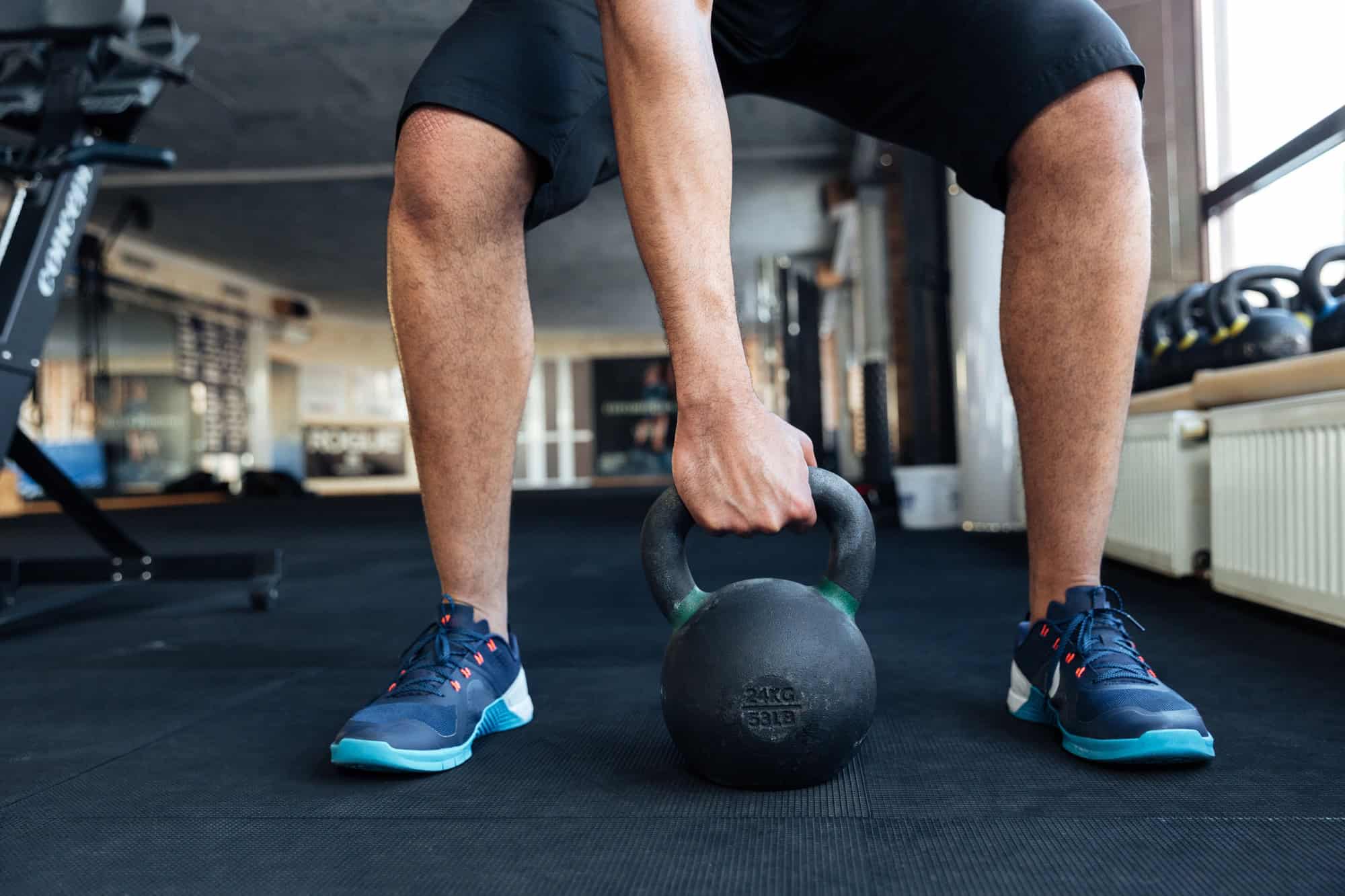
If you have access to some equipment like dumbbells, kettlebells, or a barbell, your full body exercise options expand even further. Adding weight can increase the strength-building stimulus and often the calorie burn too. Below are a few excellent equipment-based full body exercises:
- Deadlifts – Often called the king of full-body lifts, deadlifts involve lifting a weight (barbell, dumbbells, or even a heavy everyday object) from the ground up to hip level. Done properly, they recruit your glutes, hamstrings, quads, lats (upper back), and core – pretty much everything from your heels to your shoulders. Deadlifts build tremendous total-body strength, especially in the backside of your body, and they challenge your hips and spine to move safely and powerfully. Start light to nail down good form (flat back, engage your core, and drive through your heels).
- Squat to Overhead Press (Thruster) – This exercise is a two-in-one combo: you perform a squat holding weights at shoulder level, then as you stand up, you press the weights overhead. It combines a lower-body move with an upper-body push, hitting legs, glutes, shoulders, arms, and core in one shot. Thrusters are a staple in functional training and CrossFit because they are extremely efficient (and yes, tiring – in a good way). Keep the movement controlled and use your leg power to help push the weights up.
- Kettlebell Swings – Using a kettlebell (or a single dumbbell if you don’t have a kettlebell), the swing is an explosive hip-hinge movement. You swing the weight from between your knees up to about chest level by powering through your hips. This move targets your hamstrings, glutes, and core, while your arms and shoulders guide the weight. Swings are fantastic for developing power and getting your heart rate up. Just be sure to use your hips (not your lower back) to drive the movement and start with a weight you can control.
- Renegade Rows – This move merges a plank with a rowing motion. Get into a push-up position with your hands on two dumbbells. Keeping your body in a straight line (brace that core!), row one dumbbell up at a time by bending the elbow and pulling it toward your ribcage. Essentially, you’re doing a one-arm dumbbell row while the other arm stabilizes you in a plank. Renegade rows work your back and biceps, and they seriously challenge your core and shoulder stability. If doing a row from your toes is too hard, drop to your knees in the plank or do one arm at a time while stabilizing with the opposite hand on the floor.
- Medicine Ball Slams – If you have a medicine ball, slams are a fun full-body power exercise (and a great stress reliever). You lift the ball overhead (engaging your legs and core) and then powerfully slam it to the ground using your entire body. This movement works your arms, shoulders, core, and legs in a dynamic way. It’s like doing an explosive squat and crunch simultaneously. Just make sure to use a sturdy, non-bouncy medicine ball and a floor that can handle it.
- Farmer’s Carry – Grab a heavy pair of dumbbells or kettlebells, hold them at your sides, and walk for a set distance or time. It sounds almost too simple, but a farmer’s carry will light up your whole body. Your grip, arms, shoulders, and core work to stabilize the weights, while your legs and hips carry you forward. This exercise is superb for core strength and improving posture. It has real-life carryover (think hauling grocery bags or luggage) and is excellent for building endurance in your traps and forearms.
When using weights, always start with a load you can handle with good form. Full body exercises with equipment can be intense, so focus on technique before you go heavier. These moves are highly effective, but they can be taxing if done incorrectly. If you’re new to any of them, consider asking a trainer for pointers or start with very light weight to practice. Quality over quantity is the name of the game.
Sample Full-Body Workout Routine

To tie it all together, let’s put some of these exercises into a sample workout routine. This is a balanced full-body workout you can do 2–3 times per week. It hits all the major areas and mixes strength with a bit of cardio. Remember to warm upfor a few minutes first (e.g. light jogging in place, arm circles, bodyweight squats) to get your blood flowing and joints ready.
Sample Workout (Full Body Blast) – Perform the following exercises in order. Rest about 60–90 seconds between sets (or less if you want more of a cardio challenge). If you go through one set of each exercise in a circuit fashion, rest ~2 minutes after completing the circuit, then repeat the circuit for the prescribed number of sets.
- Bodyweight Squats – 3 sets of 12 reps.
Focus on form: keep your heels down, chest up, and squat as low as is comfortable for you. This move will warm up and work your legs and core. Make it harder: hold a weight at your chest (a dumbbell or even a heavy book) to turn it into a goblet squat. - Push-Ups – 3 sets of 8–10 reps.
Perform full push-ups on the floor, or modify by doing them on your knees or against a wall if needed. Keep your body in a straight line from head to heels. This works your chest, shoulders, arms, and core. If 8–10 reps is easy, do more or slow down the tempo to increase the challenge. - Bent-Over Dumbbell Rows – 3 sets of 10 reps (each arm).
Hinge at the hips with a flat back, and row two dumbbells (or filled water bottles/resistance bands) by pulling your elbows back, squeezing your shoulder blades together. If you only have one weight, do one arm at a time, resting the other hand on a chair or bench for support. This exercise targets your back (lats, upper back) and biceps, balancing out the push-ups. - Walking Lunges – 2 sets of 10 steps each leg.
Take a big step forward into a lunge, lowering until your front thigh is about parallel to the ground (or as low as comfortable), then step forward with the other leg into the next lunge. These work your quads, hamstrings, and glutes, while engaging your core for balance. If you’re limited on space, you can do alternating forward lunges in place. Make it harder: hold dumbbells at your sides; make it easier: do fewer reps or hold onto a wall lightly for balance. - Plank – 2 sets, hold for 30 seconds each.
Get into a plank position on your forearms (elbows under shoulders) or hands. Keep your body straight from head to heels. Don’t let your hips sag or pike up. This static hold lights up your abs, back, and even shoulders and legs. If 30 seconds is too tough, start with 15–20 seconds. If it’s too easy, try 45–60 seconds, or lift one foot off the ground to increase the difficulty. - Burpees – 2 sets of 8 reps.
Finish with burpees for a final full-body cardio boost. From standing, squat down, place your hands on the floor, jump or step back into a plank, do a push-up (or skip it), jump or step your feet back to squat, then explode up into a jump with hands overhead. That’s one rep. Eight reps per set will give you a good metabolic burn to end the workout. Make it easier: skip the push-up or the jump; make it harder: do 10 reps per set or add a tuck jump at the end. (Feel free to lovingly curse my name during this part – burpees are tough, but they work!)
After completing this routine, cool down with a bit of stretching or a short walk to let your heart rate come down. This entire workout can be done in roughly 30 minutes, but it covers everything: legs, chest, back, arms, core, plus a hit of cardio. You can also break it up into circuits (do one set of each exercise back-to-back, then repeat) or do all sets of one exercise before moving to the next – whichever you prefer.
Feel free to adjust the routine based on your fitness level. If it’s too tough, reduce the reps or sets (for example, do 2 sets instead of 3 for the first few exercises). If it feels too easy, you can add weight to the squats or lunges, do more reps, or shorten your rest periods to intensify the workout. The beauty of full-body routines is their flexibility – as long as you include a variety of movements that cover the whole body, you’re doing it right.
Putting Full Body Exercises Into Action
Knowing about full body exercises is one thing – actually doing them consistently is where the magic happens. The good news is that implementing these all-in-one moves into your life can be straightforward and very rewarding. Here’s a simple action plan to get you started:
- Start Small and Schedule It: Commit to doing a full-body workout routine two or three times per week. Mark it on your calendar like an important appointment. You don’t need a perfect program from day one; even 20-30 minutes per session is enough to see benefits. The key is consistency. Treat those workout times as non-negotiable “you time.”
- Use the Sample Routine (or Customize Your Own): Try the sample workout above for a few weeks. Focus on mastering the form of each exercise. If you get bored or want variety, swap in equivalent exercises (for instance, do incline push-ups instead of floor push-ups, or try kettlebell swings instead of squats on one of the days). Keep the structure similar – full body exercises that cover all major muscle groups.
- Progress Gradually: Each week, aim to improve just a little. Add 1-2 reps to your sets, or use a slightly heavier weight, or do an extra set once you feel ready. These small progressions add up to big results over time. Full body training allows frequent practice of each movement, so you might find you improve quickly at first. Enjoy those newbie gains, but always prioritize good form over simply piling on more weight or reps.
- Listen to Your Body: Full body workouts can be challenging, and you’ll probably feel pleasantly sore in several places after the first few sessions – that’s normal! It means you worked those muscles. But you shouldn’t feel sharp pain or be so sore that you can’t move the next day. If that happens, scale back a bit. It’s okay to adjust the volume (sets/reps) to suit your recovery. Make sure to get rest days in between full-body sessions so your muscles can repair and grow stronger.
- Stay Consistent and Be Patient: Because full body exercises engage so much of your body at once, you might notice improvements in your stamina and strength within a few weeks. You could also notice your clothes fitting differently as you build muscle and burn fat. But remember, fitness is a journey. The real payoff comes from sticking with it for months and years. There’s no rush to be perfect – aim for progress. Maybe today you can only do modified push-ups; in a month, you might do them with full form. Celebrate those wins!
Bottom line: Full body exercises offer a practical, no-nonsense way to train. They address multiple fitness goals – building strength, losing fat, improving mobility – all at once, making them ideal for anyone who wants maximum return on their effort. By incorporating the moves and routine outlined here, you can simplify your workouts without sacrificing results.
Give full body workouts a try and see how they fit into your life. You might be surprised at how much you can accomplish in a short workout when you focus on the big movements. Remember, the aim isn’t to punish yourself or reach some crazy level of perfection; it’s to build a stronger, healthier you in a sustainable way. Full body exercises just happen to be one of the best tools to help you do that. So next time you’re wondering what to do at the gym (or in your living room), you’ve got an answer: hit the whole body, keep it simple, and get on with your day – feeling stronger and more accomplished than before. Happy training!(4)(5)